
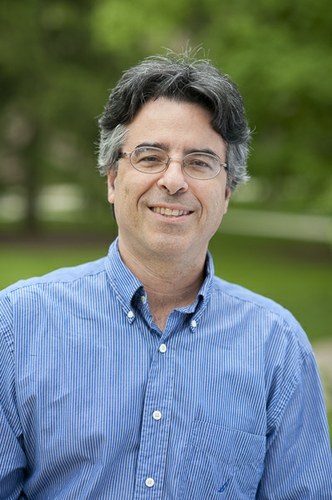
Matthew Kaplan, Ph.D.
- Professor, Intergenerational Programs and Aging
7A Ferguson Building
University Park, PA 16802
- Email msk15@psu.edu
- Office 814-863-7871
Areas of Expertise
- Developing & evaluating intergenerational initiatives in diverse settings.
- Training Extension educators and other professionals in intergenerational programming.
- Establishing intergenerational strategies for civic engagement and environmental design.
Websites
Education
- Ph.D., Environmental Psychology, City University of New York Graduate Center
- M.A., Psychology, Hunter College, City University of New York
- B.A., Psychology, State University of New York at Stony Brook
Responsibilities
- Provide statewide leadership for program initiatives related to intergenerational engagement and aging, in conjunction with extension agents and other public groups.
- Develop and support nonformal education programs that strengthen intergenerational relationships and competencies in children, youth/4-H'ers, and families across the life span.
- Promote initiatives that yield healthy aging outcomes, improved family care of aging and disabled persons, positive family dynamics, and improved intergenerational relationships in civic settings.
Research and/or Extension Areas
The focus of my research and extension/outreach activities is on intergenerational strategies for supporting children, youth, older adults, families, and communities. My intergenerational work fits into four broad thematic areas:
- Intergenerational strategies designed for specific settings and target groups (includes early childhood care/education centers, adult care facilities, and retirement communities).
- Intergenerational strategies to promote community planning and civic engagement (includes focus on natural as well as the built environment).
- Strategies for improving intergenerational communication within families (includes work with families that own and operate small farms, families with grandparents and other relatives raising children, and families experiencing conflict around issues related to food selection and eating practices).
- Principles and processes for developing effective intergenerational programs, practices, and policies (emphasis on common themes that apply across settings and national and cultural contexts).
In each of these areas, results from research projects inform the Extension agenda. New approaches for bringing the generations together are developed, piloted, and, if found to be effective, disseminated to Extension educators and other professionals.
Courses Taught
AYFCE (CI ED) 845 - Intergenerational Programs and Aging (online course)
Recent Publications
Jl. Articles:
Kaplan, M., Greenwood-Junkermeier, & Bradley, L. (2019). Unlocking the potential of older adult volunteers: The Intergenerational Leadership Institute model as a resource for bolstering Extension. Journal of Extension, 57(5), Article 5FEA3. Available at: https://tigerprints.clemson.edu/joe/vol57/iss5/5/
Qiao, L., Kaplan, M., & Leng Leng, Thang, L.L. (2019). Intergenerational programs and practices in China: Results based on a web search method. Journal of Intergenerational Relationships. Published online: 30 Jul 2019. DOI: 10.1080/15350770.2019.1623148. E-print copy.
Li, Q. & Kaplan, M. (2017). Intergenerational strategy and its social practice in an aging society: Possibilities and the future of China. Social Sciences Abroad, (4), 54-63. [In Chinese.]
Sobko, T., Zhenzhen, J., Kaplan, M., Wong, E., Lee, A., & Tseng, C.H. (2017). Promoting healthy eating and active playtime by connecting to nature families with preschool children. Evaluation of pilot study “Play&Grow." Pediatrics Research, 81, 572-581. DOI: 10.1038/pr.2016.251
Lai, A. & Kaplan, M. (2016). “Weaving intergenerational engagement into ESL instruction: Case study of a university-based program in Hong Kong." International Journal of Teaching and Learning in Higher Education, 28(2), 254-264.
Sobko, T., Tse, M., & Kaplan, M. (2016). A randomized control trial for families with preschool children – promoting healthy eating and active playtime by connecting to nature. BMC Public Health, 16, 505. DOI: 10.1186/s12889-016-3111-0
Kaplan, M., Sánchez, M., & Bradley, L. (2015). Conceptual Frameworks and Practical Applications to Connect Generations in the Technoscape. Anthropology and Aging, 36(2), Nov., 182-205.
Sánchez, M., Kaplan, M., & Bradley, L. (2015). Using technology to connect generations: Some considerations of form and function. Comunicar, 45. doi: 10.3916/C45-2015-10
Kaplan, M. & Perez-Porter, M. (2014). Support for grandfamilies: A mosaic of intervention strategies. Journal of Intergenerational Relationships, 12 (2), 99-112.
Sánchez, M. & Kaplan, M. (2014). Intergenerational learning in higher education: Making the case for multi-generational classrooms. Educational Gerontology, 40(7), 473-485.
Kaplan, M., Wikert, B., Scholl, J., & Rushton, M. (2013). Intergenerational panels at centennial events: Stimulating discussion about continuity and change in the 4-H program. Journal of Extension, 51 (1). [WWW document]. URL: http://www.joe.org/joe/2013february/a6.php.
Lai, A. & Kaplan, M. (2013). Intergenerational strategies for enriching the ESL education platform. Journal of Intergenerational Relationships, 11 (4), 425-439.
Kaplan, M., Sánchez, M., Shelton, C., & Bradley, L. (2013). Using Technology to Connect Generations – Report and program profiles database. Washington, D.C.: Generations United. Available online: http://extension.psu.edu/youth/intergenerational/program-areas/technology
Books:
Kaplan, M., Thang, L.L., Sánchez, M. and Hoffman, J. (Eds.). (2020). Intergenerational contact zones: Place-based strategies for promoting social inclusion and belonging. New York: Routledge.
Kaplan, M., Sánchez, M., and Hoffman, J. (2017). Intergenerational pathways to a sustainable society. New York, NY: Springer.
Becker, J., Kaplan, M., Dickinson, K.R., & Jacobson, M.G. (Eds.) (2013). Estate and succession planning for farm and forest landowners. University Park, PA: Penn State University. [Online book and companion resource for eLearning curriculum.]
Sánchez, M. Kaplan, M., & Saez, J. (2010). Intergenerational programs and practices: What, why, and how. [In English and Spanish]. Madrid: IMSERSO (Institute for Older Persons and Social Services), Spain Ministry of Labor and Social Affairs.
Kaplan, M. & Hanhardt, L. (2003). Intergenerational activities sourcebook. Penn State University, University Park, PA. Available online.
Book chapters:
Kaplan, M. (2022). Intergenerational Studies: A Multi-Pronged, Yet Unified Field of Inquiry and Practice. In A. Kusano et. al. (Ed.), Intergenerational exchange activities as a social network toward the creation of a new society. (Series 3), (pp. 2). Kyoto, Japan: Sangaku Shuppan Co.., ISBN/ISSN: IBSN 978-4-908877-46-9
Sciegaj, M., Kaplan, M. & Yang, H. (2022). Long-Term Services and Supports (LTSS) for the Elderly in the U.S. In H. Yang (Ed.), In H. Yang (Ed.), Research on the construction of elderly care service systems under the trend of population aging. [In Chinese] (pp. 47-54). Beijing: People's Publishing House.
Kaplan, M. & Larkin, E. (2021). Building Community: Intergenerational Projects with Young Children. In M.R. Jalongo and P.A. Crawford (Eds.), Intergenerational bonds: The contributions of older adults to young children's lives (pp. 223-239). Cham: Springer Nature. Peer-reviewed/refereed. ISBN/ISSN: ISBN 978-3-030-81964-4
Kaplan, M., Sánchez, M., Thang, L.L., & Hoffman, J. (2020). Conclusions: Lessons learned about the design and functioning of Intergenerational Contact Zones. In Kaplan, Thang, Sánchez, & Hoffman (Eds.). Intergenerational contact zones: Place-based strategies for promoting social inclusion and belonging (pp. 298-314). New York: Routledge.
Kaplan, M., Windon, S., & Zavada, E. (2020). Transforming a barn into an ‘intergenerational planning zone’. In M. Kaplan, et al. (Eds.). Intergenerational contact zones: Place-based strategies for promoting social inclusion and belonging. Op. cit. 49-59.
Smith, S. & Kaplan, M. (2020). Forests as intergenerational contact zones: Teaching about and experiencing forests through historical interpretation. In Kaplan, et al. (Eds.). Intergenerational contact zones: Place-based strategies for promoting social inclusion and belonging. Op. cit. 109-116.
Sánchez, M. & Kaplan, M. (2019). Intergenerational programs. In D. Gu and M.E. Dupre (Eds.). Encyclopedia of gerontology and population aging. New York, NY: Springer Nature.
Kaplan, M. & Larkin, E. (2018). Intergenerational programs. In M.H. Bornstein, M.E. Arterberry, K.L. Fingerman, & J.E. Lansford (Eds.). The SAGE encyclopedia of lifespan human development (pp.1184-1187). Thousand Oaks, CA: Sage.
Liu, S-T. & Kaplan, M. (2017). An intergenerational paradigm for environmental education. In: A. Russ & M. Krasny (Eds.) Urban environmental education review. Ithaca, NY: Cornell University Press.
Kaplan, M. & Haider, J. (2015). Creating intergenerational spaces that promote health and wellbeing. In R. Vanderbeck & N. Worth (Eds.). Intergenerational spaces (pp. 33-49). London, UK: Routledge.
Kaplan, M. & Sánchez, M. (2014). Intergenerational programs and policies in ageing societies. In S. Harper and K. Hamblin (Eds.). International handbook on ageing and public policy (pp. 367-383). Cheltenham, UK: Edward Elgar Publishing.
Thang, L.L. & Kaplan, M. (2013). Intergenerational pathways for building relational spaces and places. In G.D. Rowles, & M. Bernard (Eds.). Environmental gerontology: Making meaningful places in old age (pp. 225-251). NYC: Spring Publishing Company.
Lawrence-Jacobson, A. & Kaplan, M. (2012). The applicability of empowerment theory to intergenerational programming. In A. Kusano, K. Mizobe, H. Uchida, & A. Yoshizu (eds.). (2012). Tayouka-shayakai wo tsumugu sedaikankoryu (“Intergenerational Relationships to Unite the Diversified Society"). Otsu, Japan: Sangaku Publishing Co., Ltd.
Kaplan, M. (2007). Evaluating intergenerational programs that aim to improve the community. In M. Sánchez (Ed.). The evaluation of intergenerational programs (pp. 102-118). [In English and Spanish]. Madrid, Spain: Instituto de Mayores y Servicios Sociales (IMSERSO). Available online.
Other:
Katz, I. & Kaplan. M. (2022). “Intergenerational Community Planning.” American Planning Association PAS (Planning Advisory Service) Report 603, Dec. 1. (64 pages). Chicago, IL: APA. ISBN: 978-1-61190-211-2
